iamneo

Edit Template

Blog

Blog

The Curriculum That 2030 Demands – And How Universities Can Lead the Way 

The world your students are graduating into looks nothing like the world your curriculum was built for.  By the time your 2026 admits complete their degrees, over 70% of new code written in the industry will be AI-generated. Nearly all developers will be working alongside AI tools daily. And entirely new roles – ones that didn’t exist five years ago – will be the most sought-after positions in the market. The question universities need to ask themselves isn’t whether to adapt. It’s whether they’ll lead or be left behind.  At iamneo, we believe the answer starts with a fundamental rethinking of how education is structured — not patchwork additions, but a ground-up reimagination of what it means to be industry-ready.  The Gap Is Wider Than You Think  Most engineering curricula today still treat AI as an elective – a single course tucked into the fourth or fifth semester, optional for many, theoretical for most. Students graduate having never genuinely worked with the tools they’ll use on day one of their first job. They encounter AI assistants for the first time at work, not in the classroom.  This isn’t a small gap. It’s a fundamental mismatch between what universities are producing and what the industry urgently needs.  The students coming out of traditional programs are technically trained – but they’re trained for a version of the industry that’s rapidly disappearing. Memorization-based exams, language choices that belong to a previous era, zero exposure to AI-native workflows – these aren’t just inefficiencies. They’re barriers to employability.  What a Truly AI-Integrated Curriculum Looks Like  At iamneo, we’ve built something different. Not AI as a subject. AI as the environment.  Our curriculum is designed so that students work with AI tools across nearly every subject, from their very first semester. The philosophy is simple: if the industry runs on these tools, then the classroom should too. Students don’t just learn about AI — they learn with it, building real projects and developing the intuition to know when and how to deploy it effectively.  This begins from week one. Students start with the language the industry actually uses — the foundation of modern AI and data work — rather than languages that serve primarily as academic exercises. Every semester introduces progressively more sophisticated AI-augmented workflows, from writing and debugging code collaboratively with AI assistants, to generating and optimising database queries, to eventually designing entire systems and applications where AI is a genuine co-creator.  By the time students graduate, they’ve built multiple end-to-end projects using AI tools, they understand the underlying principles of machine learning and generative AI, and they’ve developed the judgment to work with AI rather than being dependent on it blindly.  The Pedagogy Behind It  The structure we’ve developed follows a deliberate arc within each subject: foundational concepts come first, then integration of real industry tools, then application through AI-assisted projects. Assessments are entirely code-based — no theory exams that reward memorisation. Students are evaluated on what they can actually do.  What makes this approach distinctive is that it doesn’t lower the bar. It raises it — but in the direction that matters. Students are challenged to understand and explain AI-generated outputs, not just produce them. They’re pushed to develop critical thinking around what AI gets right, what it gets wrong, and why.  We’ve also embedded AI coaching into every classroom through our proprietary platform. Students have access to a Socratic AI coach that guides them through problems without simply handing them answers. It asks questions. It offers hints. It tracks progress. It’s available around the clock — because learning doesn’t stop when class ends. This same coach helps students develop communication skills, professional writing, and interview readiness alongside their technical abilities.  Beyond the Code: Preparing Students to Use AI Responsibly  One area where traditional curricula fall dangerously short is in preparing students for the responsibilities that come with AI. Data privacy legislation, ethical AI governance, understanding the legal frameworks that govern how organisations can and cannot use AI – these aren’t soft topics. They’re becoming core competencies.  Our curriculum treats them as such. Students graduate not just technically capable, but genuinely prepared to operate within the regulatory and ethical landscape of the industry they’re entering.  How Universities Become Pioneers  Here’s what separates an institution that adopts AI education from one that leads it: the difference is in the depth of integration and the commitment to keeping pace with a field that evolves rapidly.  Being a pioneer doesn’t mean chasing every new tool. It means having a curriculum architecture flexible enough to evolve, a delivery model that embeds AI into the learning experience rather than appending it, and a partner who treats curriculum design as an ongoing process rather than a one-time deliverable.  iamneo’s approach is built for exactly this. As the field of AI changes – and it will continue to change faster than any fixed syllabus can anticipate – we evolve the curriculum alongside it. Institutions that partner with us don’tjust get a better curriculum today. They get a system designed to stay ahead.  The Student Who Graduates in 2030  Imagine a graduate who has spent three years working alongside AI tools in every subject they studied. Who has built projects that use generative AI, not just read about them. Who can walk into any technical interview having already passed hundreds of machine-assessed challenges. Who understands not just how to use these tools, but when to trust them and when to question them.  That’s the graduate the industry is desperately looking for. That’s the graduate your institution can produce – if the curriculum is designed for where the world is going, not where it’s been.  The universities that make this shift now won’t just be keeping up. They’ll be setting the standard.  iamneo partners with universities to design and deliver AI-integrated curricula that prepare students for the realities of 2030 and beyond. If you’re ready to explore what an AI-ready transformation looks like for your institution, the conversation starts with your current curriculum.  Frequently Asked Questions iamneo partners with universities to design and deliver AI-integrated curricula built for the realities of 2030. To explore what this transformation looks like for your institution, get in touch with our curriculum team.  
Blog

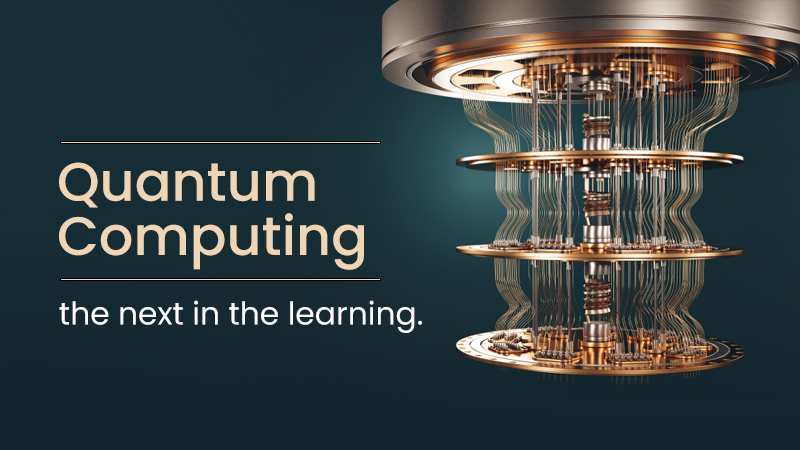
Quantum Computing: The Next In The Learning.

What is Quantum Computing? Quantum computing, is a term that once echoed through the halls of physics laboratories. Now it has transcended its theoretical roots to emerge as a game-changer in the world of technology. But what exactly is a quantum computer? Why should we learn? In essence, it harnesses the principles of quantum mechanics to process information at speeds that classical computers can only dream of. Quantum Computing in Education: A Positive Disruption In the realm of education, the influence of quantum computing is nothing short of revolutionary. Imagine a classroom where students, armed with the power of quantum algorithms, untangle complex problems with lesser experience. Quantum computing can revolutionize the way we teach and learn. Making subjects like cryptography, data analysis, and optimization not just accessible but also intuitive. “The world has been changing even faster as people, devices, and information are increasingly connected to each other. Computational power is growing and quantum computing is quickly being realized. This will revolutionize artificial intelligence with exponentially faster speeds. It will advance encryption. Quantum computers will change everything, even human biology.” ― Stephen Hawking Skills for the Quantum Future As quantum computing becomes a focal point in education, students need to learn quantum skills. These lay the groundwork for navigating the complications of quantum mechanics. Navigating Quantum Horizons The skills acquired through quantum computing education are not just confined to the quantum realm. They foster critical thinking, problem-solving, and adaptability – essential attributes for success in any field. As industries evolve, the demand for individuals well-versed in quantum computing will soar. There will be a pool of opportunities for those who dare to explore the quantum horizons. The Bright Quantum Future For students immersing themselves in the quantum world, the future shines brightly. As quantum technologies become integral to various industries, those equipped with quantum computing skills will find themselves at the forefront of innovation. The possibilities are limitless – from spearheading breakthroughs in medicine to shaping the future of artificial intelligence. The students of today learning quantum computing are the architects of tomorrow’s technological landscape, where the only constant is the promise of innovation and discovery.

Blog

Major Recruitment Trends influencing Talent Acquisition

In today’s digital age, the recruitment process is evolving at breakneck speed and hiring great talent with the right skill sets hasn’t been this onerous in the past. The pandemic’s impact and the constant shift in recruitment trends have contributed to this transition. As we look back at the start of the decade, recruitment looked completely different, with the TA teams solely relying on traditional recruitment models. But now, the hiring tables have turned, and the recruitment industry has already begun its digitalisation journey. The market demands are constantly changing, and so are the recruitment trends that play a pivotal role in sourcing the best-fit talent. Hiring candidates, especially the gen z category, is a cut-out task in today’s fast-paced and dynamic recruitment industry. Hence, recruiters need to stay up-to-date with the latest recruitment trends to ensure that they can effectively find and attract top talent. Here are some of the significant recruitment trends that are largely influencing talent acquisition today: Top recruitment trends influencing talent acquisition: 1. Virtual Recruitment: Remote hiring or virtual recruitment was one of the significant recruitment trends that turned heads in 2021 and 2022. More than just being a trend, it almost changed the modus operandi of recruitment post-pandemic. As candidates were confined to the four walls, recruiters were left with no option but to leverage video-conferencing platforms like Zoom, Microsoft Teams, Cisco Webex, and others to conduct interviews. Though virtual recruitment was seen only as a temporary alternative to in-person interviews, things took a turn quickly. Companies found this recruitment model to be simpler, cost-effective and time-saving. Offering a multitude of benefits, it is evident that the virtual recruitment model will continue even in the coming years and shall remain a top recruitment trend. Fact Drop – According to a Forbes report on recruitment, 60% of recruiters today consider video-conferencing technology to interview candidates. Source : Forbes 2. The Role of Artificial Intelligence: There is no doubt that technology has taken over the digital era. AI, Machine Learning, IoT, Big Data, and Robotics have already redefined how businesses operate today. Thanks to the constant technological advancements and innovations. Amongst the advanced technologies leveraged today, AI plays a greater role in the recruitment industry. From automating candidate sourcing to screening, and evaluation – AI significantly helps optimise recruitment processes. A larger ratio of recruitment platforms available today is built on Artificial Intelligence as its core technology. Keyword-based resume screening, chatbot support for candidates, elimination of interview bias, and data-driven decision-making have completely changed the dimensions of recruiting, with AI playing the anchor role. Hence, it’s no doubt that AI will continue to transform the recruitment industry in the coming years. 3. Diversity Hiring: Diversity and inclusion aren’t something new to our ears, but the increasing focus on diversity hiring recently has led to this becoming a major recruitment trend. As companies have started to shed the spotlight on gender-neutral hiring and diverse workforce, recruiters have recognised that diversity hiring is not just a trend but a practice to follow in the coming years. Companies with a diverse and inclusive workforce have shown signs of improved productivity and operational efficiency. Diversity hiring has, in fact, had a greater impact on improving brand value and positioning. Hence, it’s important for HR teams today to constantly focus on DEI going forward. Did you know? – A report by Mckinsey&Company reveals that companies are missing out on 39% of job applicants because of a lack of perceived inclusion. Source : Mckinsey&Company 4. Hybrid Work Model Is there someone who would say “No” to a hybrid work model post-pandemic? Not really! Though the work-from-home model came as a timely solution during the covid-19 outbreak, it has now become a policy of the new normal hiring. Compared to all the recruitment trends the industry has witnessed in recent years, this has been widely adopted. Even as companies welcome their employees back to offices, the hybrid work model is still the most sought-after. In fact, a greater ratio of gen z candidates today specifically look for companies that offer flexible work environments. This model also enables companies to hunt down global talent without geographical constraints. As covid-19 is soaring again, the hybrid work model shall remain a top recruiting trend in 2023. 5. Predictive Analytics: This is one of the newest trends in hiring that is assisting companies in assessing and forecasting a candidate’s potential behaviour. Recruiters could already narrow down possible recruits based on their experience, whereabouts, education, and more on various digital platforms. Predictive analytics has given further insights by providing recruiters with a list of the most suitable personnel for the job position (even those not actively looking for a job). This fresh trend has been beneficial for companies that are making use of it. Predictive analytics can be used within the talent acquisition process to help make informed decisions and gain insight into areas of strength and weakness. This can also help lower recruitment costs, identify any issues in the process, and speed up the process of filling roles. On top of this, analytics can demonstrate the success and return on investment of recruiting software. 6. Candidate Experience Another important trend in talent acquisition is the focus on candidate experience (Which never goes out of trend). This refers to a candidate’s overall impression of an organisation during the recruitment process. A positive candidate experience can increase the chances of a candidate accepting a job offer and improve the employer’s reputation as a desirable workplace. To improve candidate experience, recruiters should ensure timely communication, be transparent about the recruitment process, and offer feedback to candidates. Final Thoughts Overall, these are just a few significant trends influencing talent acquisition. However, recruitment agencies must stay abreast of new technological developments to remain suitable for the job. By staying up-to-date with these trends and adapting their recruitment strategies accordingly, organisations can position themselves as top employers and attract top talent.

Scroll to Top